


A strait barely a few kilometres wide, more than twelve thousand kilometres from Bogotá, can end up making credit more expensive for a Colombian company, squeezing its margins and changing the calculus of any investment project. The 2026 Strait of Hormuz crisis is an uncomfortable reminder of something investment bankers never forget: capital lives in a single world, and energy shocks travel fast.
What is happening in the Strait of Hormuz
The Strait of Hormuz is the most important oil chokepoint on the planet: around a fifth of the world's crude and a large share of the liquefied natural gas (LNG) moved by sea passes through it. When that passage is interrupted, there is no alternative route that can immediately replace it.
Since the end of February 2026, transit through the strait has been blocked amid an open conflict in the region. The International Energy Agency described the episode as the largest supply disruption in the history of the world oil market. Brent crude rose above 120 dollars a barrel and posted, in March, one of the largest monthly increases ever seen, of around 65%.
Key ideaThe Strait of Hormuz does not produce oil: it transports it. But whoever controls the passage controls the price, and the price of oil is the blood pressure of the global economy.
Why a distant strait hits prices in Colombia
Colombia is, in net terms, a crude exporter; a higher oil price even helps its external and fiscal accounts on the export side. So why worry? Because the effect on domestic prices —the inflation felt by companies and citizens— travels through a different channel.
Oil is a universal input: it moves freight transport, sets the cost of fuel, raises international shipping rates and works its way into the price of practically everything produced or imported. A global crude shock translates into imported inflation and higher logistics costs for any value chain. Added to that is the currency volatility that accompanies these risk-aversion episodes, which can make what Colombia buys abroad even more expensive.
The transmission channel to inflation
The sequence is familiar and repeats itself with every energy shock: crude rises, fuel and freight rise, production costs rise, and that increase ends up passing through to final prices. Inflation ceases to be a one-off phenomenon and becomes persistent when it contaminates expectations: when companies and households begin to assume that prices will keep rising, they adjust contracts, wages and prices accordingly, and inflation feeds on itself.
The 2026 data reflects that tension. According to the Banco de la República, headline inflation stood at 5.6% in March 2026 and core inflation —excluding food and regulated prices— at 5.8%, with expectations deteriorating over the year: the analysts' median for the end of 2026 moved from 4.6% to 6.4%.
The Banco de la República's response
Faced with inflation drifting away from the 3% target, the central bank responds with the tool it has: the interest rate. During 2026, the Banco de la República raised its policy rate to 10.25% in January and to 11.25% in March, and held it at that level in subsequent meetings, reiterating its commitment to the inflation target.
When the central bank raises rates to tame inflation, the cost of money rises for everyone: for the State, for companies and for every project that needs financing.
That is the real bridge between Hormuz and a Colombian entrepreneur's desk: an energy shock on the other side of the world ends up, via inflation and monetary policy, making credit more expensive and tightening the conditions for investing at home.
What it means for companies and projects
For anyone running a company or structuring a transaction, an environment like this changes several equations at once:
- The cost of capital rises. Higher rates make new debt and refinancing more expensive, and compress the returns of leveraged projects.
- Valuations adjust. A higher discount rate reduces the present value of future cash flows: the same company, the same project, is worth less when money costs more.
- Margins come under strain. Higher energy, transport and imported input costs put pressure on operating profitability.
- Liquidity becomes strategic. In uncertain environments, cash and access to financing turn into a competitive advantage.
The strategic twist: why it accelerates the energy transition
There is a less obvious and more powerful reading. Every oil crisis reminds the world of the cost of depending on fuels that travel along a handful of vulnerable routes. Energy security —producing energy at home, from sources that do not depend on a distant strait— ceases to be an environmental argument and becomes an economic and geopolitical one.
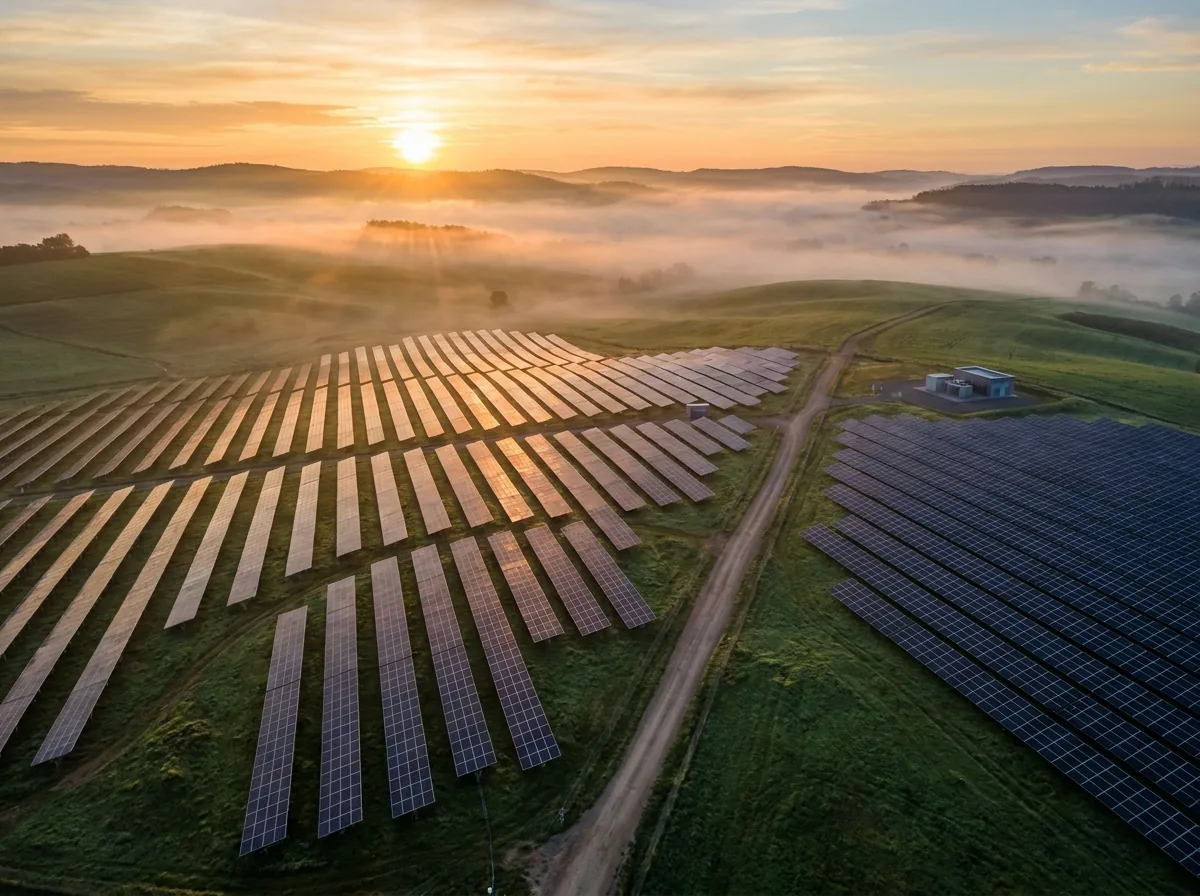
For Colombia and the region, this reinforces the investment case for renewable energy: local generation, low marginal costs and less exposure to the swings of imported crude. Shocks like Hormuz do not slow the energy transition; they accelerate it, because they realign the incentives of governments and investors towards autonomy.
What entrepreneurs and investors can do
Faced with expensive energy, inflation and high rates, the answer is not paralysis, but better structuring:
- Managing interest rate risk with hedges and an appropriate mix of fixed and floating rate debt.
- Secure predictable revenue through long-term contracts that make projects financeable even in volatile environments.
- Revisit valuations with realistic discount rates before buying, selling or raising capital.
- Assess energy and currency hedges where the business has material exposure.
- Look for the opportunity: stressed environments reorder prices and open windows for those with judgment and patient capital.
How we see it at Selva
A geopolitical shock is not just a news item: it is a variable that feeds directly into the financial model, the discount rate and the structure of a transaction. Our work at Selva Investment Banking is to translate that macro context into concrete decisions —how to finance, at what value, with which hedges and at what moment— so that the world's volatility does not turn into a poor capital decision. Understanding the connection between Hormuz and the rate on your next loan is, precisely, the difference between reacting and anticipating.
Lessons from previous oil crises
This is not the first time an energy shock has shaken the global economy, and history offers valuable clues. The oil crises of the 1970s taught that a supply shock does not only send energy prices soaring: it contaminates the entire cost chain, feeds inflation, forces central banks to raise rates and, if prolonged, raises the risk of stagnation with inflation —the dreaded stagflation. But they also taught something else: shocks accelerate the search for efficiency and alternatives. Every crude crisis has left, as its legacy, a push towards energy diversification and towards technologies that reduce dependence on oil. Whoever understands that pattern not only protects themselves from the immediate blow; they position themselves for the transition that follows.
The impact is not uniform: winners and losers
An energy shock distributes its effects unevenly, and recognising this is key to making good decisions. Transport- and logistics-intensive sectors feel the blow immediately. Agribusiness faces pressure from fuel and fertilisers, which are tied to hydrocarbon prices. Construction and real estate see both inputs and financing become more expensive. At the other end, renewable energy becomes relatively more attractive, because its cost does not depend on imported crude, and energy exporters improve their external revenue. For an investor, the exercise is not to flee risk, but to understand which side of the equation each asset in the portfolio sits on and adjust accordingly.
How to protect an ongoing business
If you have a company or a project under way, there are concrete measures to cushion the blow. Review and, where possible, renegotiate the debt structure to reduce exposure to floating rates. Include cost pass-through clauses in customer contracts, where bargaining power allows. Assess fuel and currency hedges if the business has material exposure. And, above all, strengthen liquidity: in stressed environments, available cash is the difference between riding out the storm and being forced into hasty decisions. Scenario planning —modelling what would happen if the shock lasted another six months— ceases to be a theoretical exercise and becomes a survival tool.
What to watch in the coming months
To anticipate rather than react, it is worth following a handful of signals. The Brent price and the evolution of the conflict that triggered the blockade set the pulse of the supply shock. The Banco de la República's decisions on the policy rate indicate where the cost of domestic credit is heading. The behaviour of the peso against the dollar directly affects what Colombia pays for its imports. And analysts' inflation expectations —which deteriorated markedly during 2026— reveal whether the market believes the price pressure is temporary or persistent. For an entrepreneur or an investor, monitoring these variables is not macroeconomic curiosity: it is information that feeds financing, hedging and timing decisions. The difference between those who read the board and those who ignore it is measured, in the end, in the cost and the opportunity of their next transaction.
In summary
The Strait of Hormuz crisis is a reminder that capital and energy live in the same interconnected world: a geopolitical shock thousands of kilometres away ends up, via oil prices, inflation and interest rates, making credit more expensive and tightening the conditions for investing in Colombia. The intelligent response is neither fear nor paralysis, but structure: managing interest rate risk, securing predictable revenue, revisiting valuations realistically and looking for the opportunity that every stressed environment opens. And, on the horizon, the underlying lesson repeats itself: every oil crisis strengthens the case for energy produced at home. Understanding that full chain —from Hormuz to the rate on your next loan— is what separates those who react from those who anticipate.
Frequently asked questions
Why does the closure of the Strait of Hormuz raise inflation if Colombia exports oil?
Because the effect on domestic prices comes through costs, not exports. More expensive crude raises the cost of fuel, transport, international freight and imported inputs, generating imported inflation and higher logistics costs that end up passing through to final prices.
How much did oil rise because of the 2026 Hormuz crisis?
After transit was blocked at the end of February 2026, Brent rose above 120 dollars a barrel and posted in March one of the largest monthly increases in its history, close to 65%. The International Energy Agency described the episode as the largest supply disruption in the history of the oil market.
What did the Banco de la República do in the face of this inflation?
It raised its policy rate to contain inflation and anchor expectations: to 10.25% in January 2026 and to 11.25% in March, holding it at that level in subsequent meetings and reiterating its commitment to the 3% target.
How does this affect the financing of a project or company?
Higher rates make new debt and refinancing more expensive, compress the returns of leveraged projects and reduce valuations (a higher discount rate lowers the present value of future cash flows). The cost and availability of capital become critical.
Do these shocks slow the energy transition?
On the contrary: they tend to accelerate it. Every oil crisis is a reminder of the cost of depending on imported fuels that travel along vulnerable routes, and reinforces the economic and strategic appeal of renewable energy, which is produced locally and reduces exposure to crude.
Sources and references
- Banco de la República — Monetary policy and inflation 2026
- World Bank — Strait of Hormuz disruption sends oil prices surging
- Brookings — The Strait of Hormuz and global oil markets
- Federal Reserve Bank of Dallas — What the closure of the Strait of Hormuz means
This content is informative and general in nature; it does not constitute financial, economic or investment advice. The figures cited come from public sources as at the date of publication and may vary.